Qeqertarsuaq

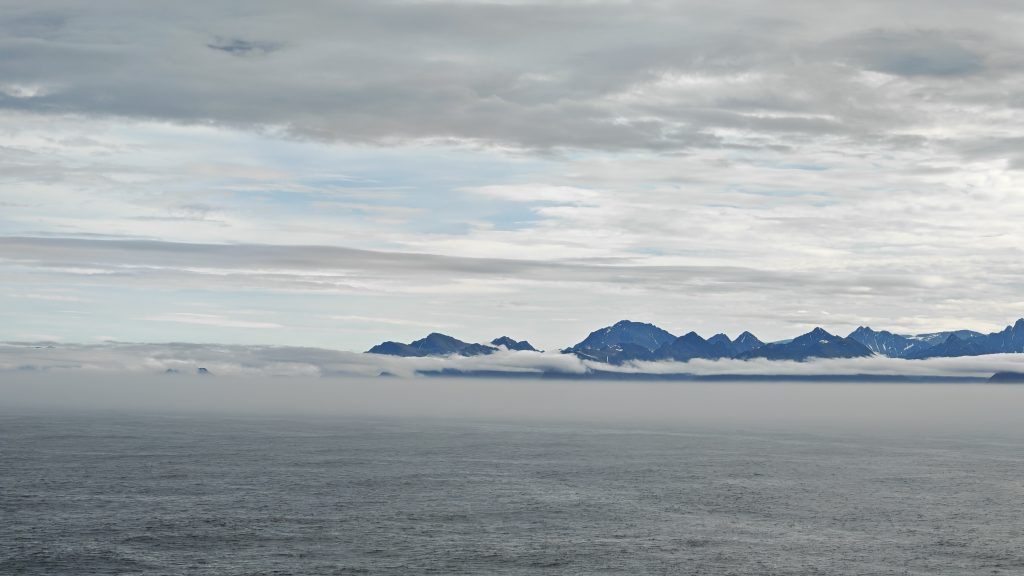
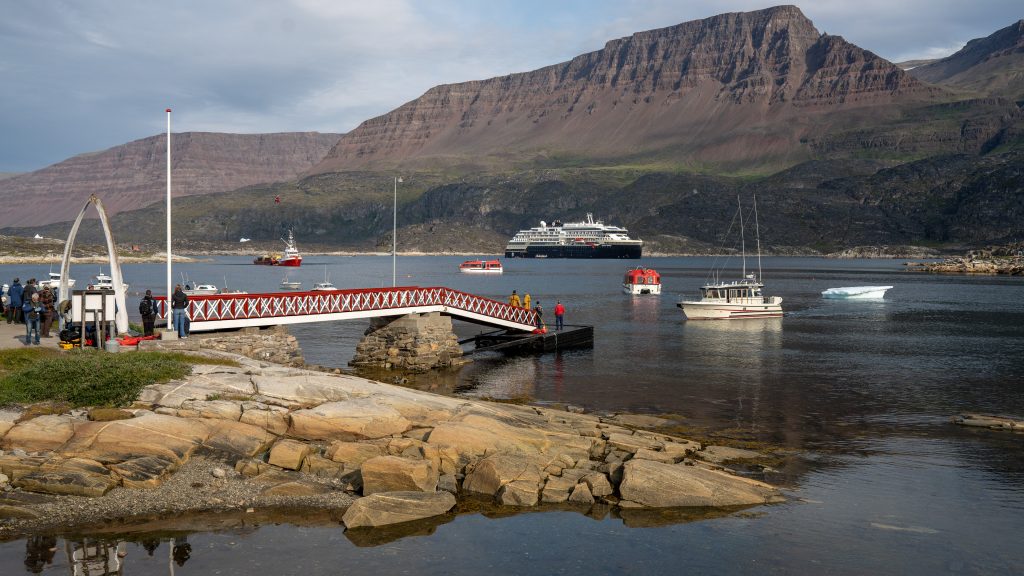
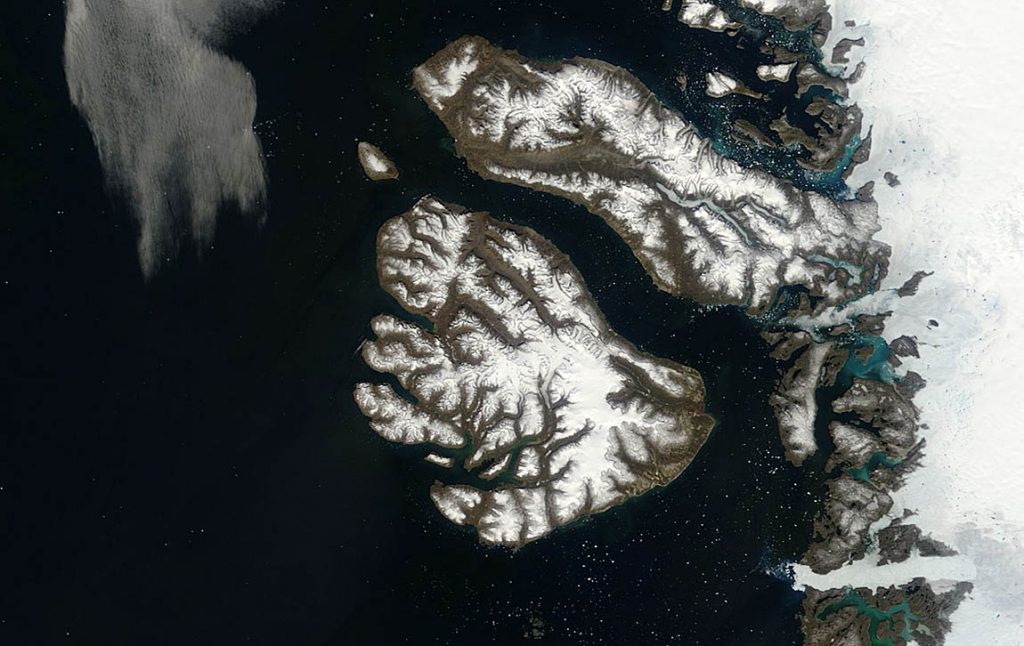
We’ve travelled along the western coast of Greenland for quite a few days now, and I have been practising pronouncing the Greenlandic place names for over two weeks – this place is the one that regularly gets my tongue in a twist! Qeqertarsuaq simply means „big island“, and that’s exactly what it is; it’s the largest one of the isles and islets just off the Greenlandic coast, and was formerly known as Disko Island in Disko Bay.
There are several thoughts on how the bay and island got their names. I would like to think they were named for their fabulous nightlife, but nope, it turns out, they are not the Studio 54 of Greenland… There are different explanations for how the bay and island ended up with their fun-sounding name: Either the name „Disko“ was somehow derived from whaler slang – Disko Bay is and always has been rich in wildlife, including whales, which were hunted almost to extinction in the 18th and 19th century. Or it may have derived its name from the Greek word „diskos“, meaning „disc“ – a reference to the round(ish) shape of the island. So, not named for its sequins, pop music and recreational drug use.
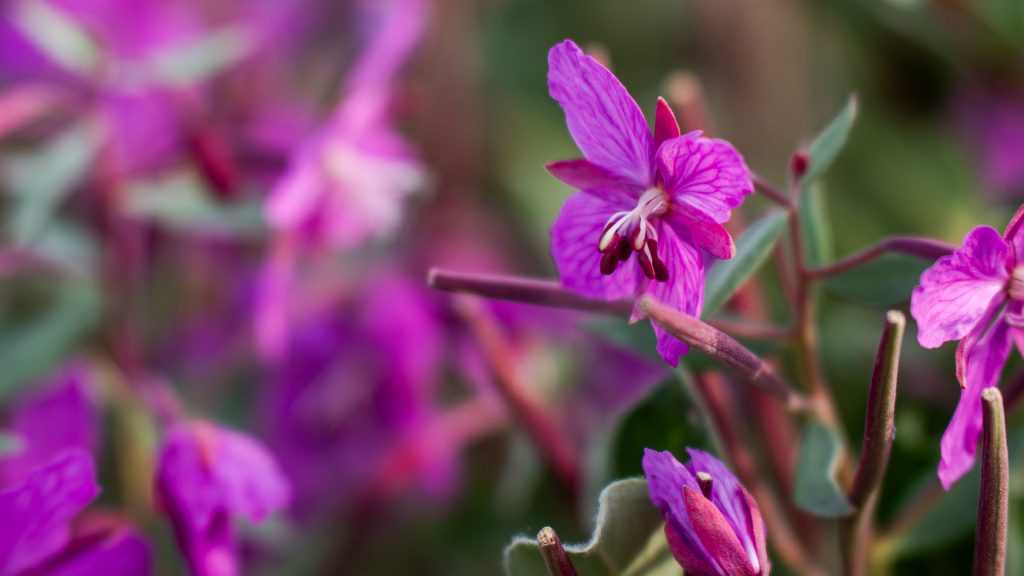
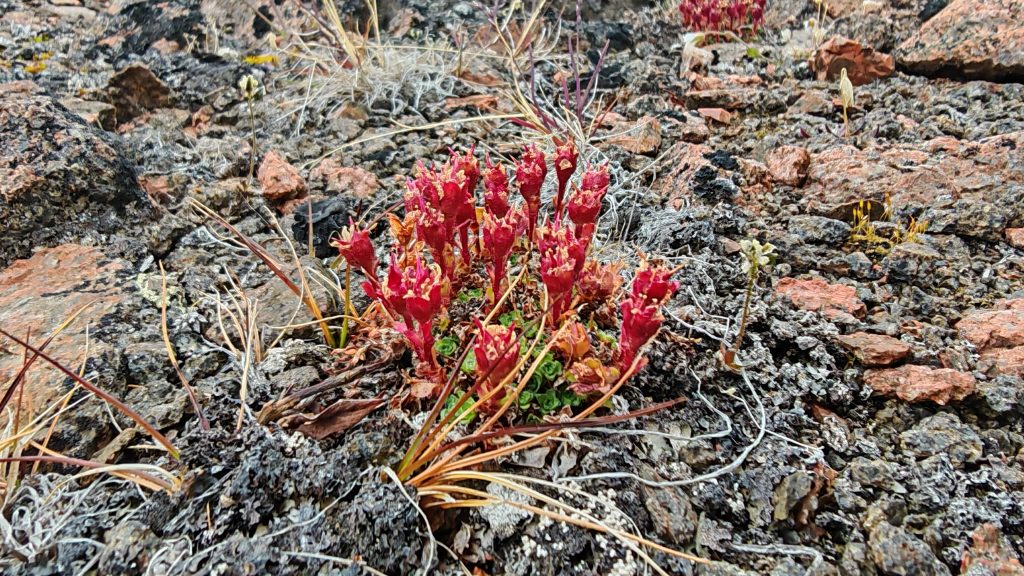
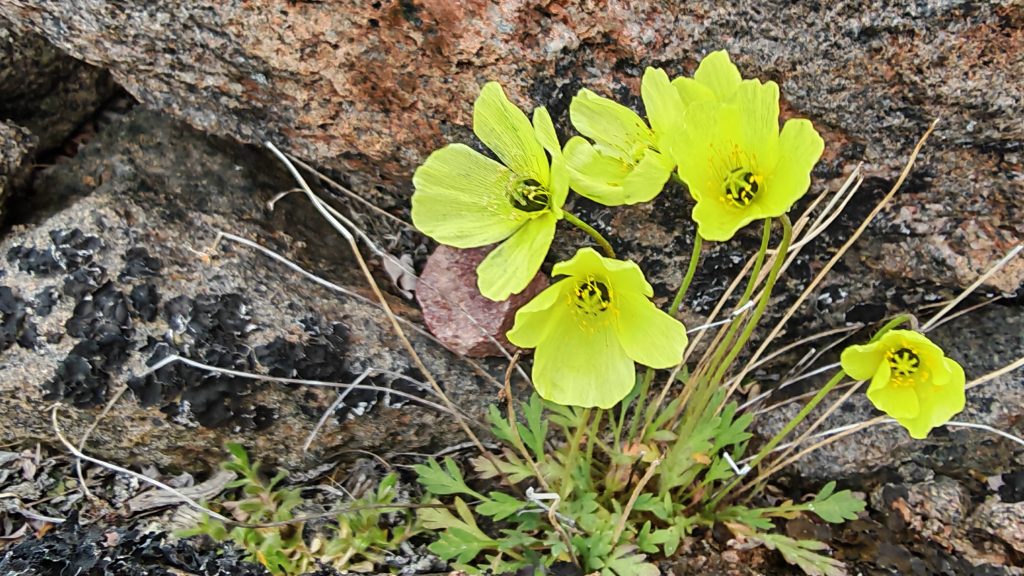
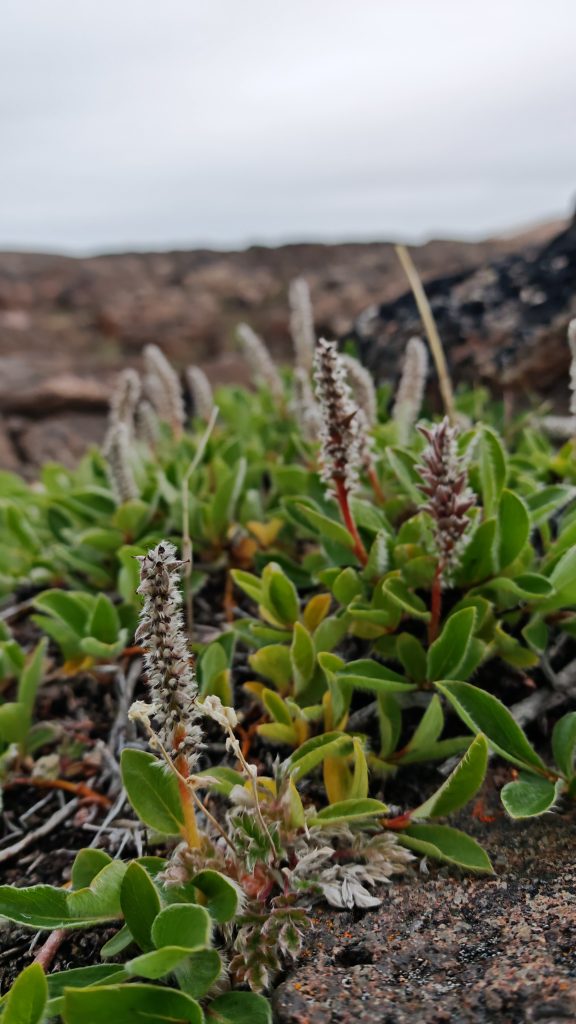
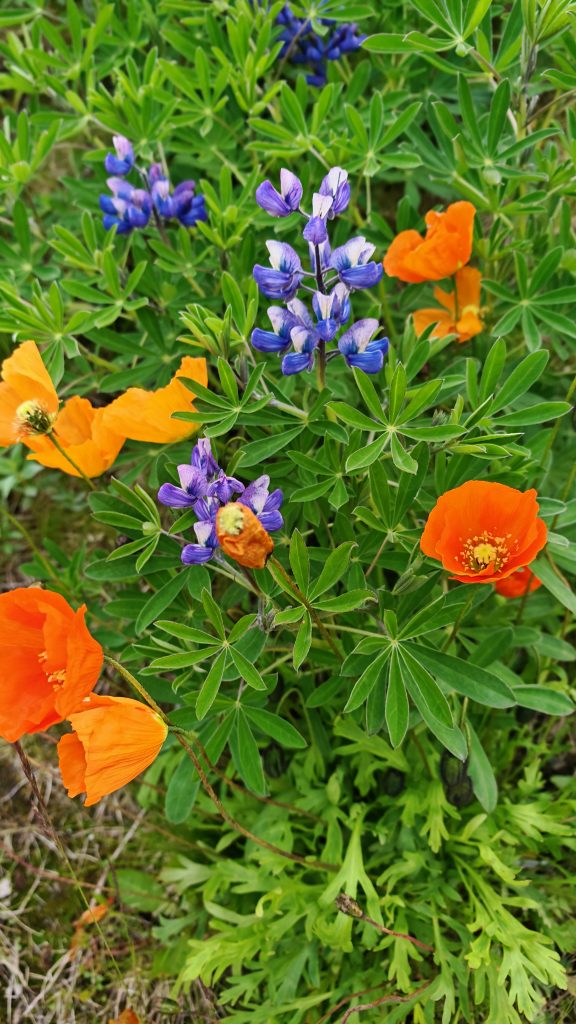
Even if Qeqertarsuaq does not offer more glittery disco glamour than other places in Greenland, it does have a lot more green. When you get here, it is quite strikingly more verdant than the other spots we have landed at along the western coast. There are different explanations for how the island ended up looking so much more green, and I will let you choose which one you think is the most likely.
There’s the scientific explanation, which, in a nutshell, is: It’s much younger than the other parts of Greenland we’ve visited. Geologically, Disko Island is just a baby – basically, the older brother of Iceland. I am not a scientist, so my rendition of the enormously complex processes will be terribly over-simplified, but let me give you the general gist:
Greenland is one of earth’s oldest land masses, dating back 3.8 billion (!) years – but at that time, little Disko Island was nowhere to be seen (and Iceland but a mere sparkle in Mother Earth’s eyes). Then, about 200 million years ago, Greenland was part of a large supercontinent called Pangea; at this point, however, the supercontinent started breaking up. Underneath the earth’s crust lies the mantle, a thick layer of rock that is seemingly solid – but in fact, it is in constant, if very slow, motion – it moves over the course of hundreds of thousands of years. The forces of this motion are incredibly strong; they are what causes the crust on top to break up into tectonic plates, and then these plates (including everything on top of them) are shuffled around in slow motion by the drag. This movement is what’s called „tectonic drift“. So, 200 million years ago, Greenland set out on its drag tour of the world.
As Greenland was being shuffled around, it was dragged over an area called a „volcanic hotspot“ about 60 million years ago. A volcanic hotspot is created when extremely hot magma from even further towards the core of our planet rises towards the surface in what is called „mantle plumes“, until it eventually breaks through the crust of the earth and erupts. Magma, once outside it’s birthplace, is called lava: Same stuff, different name, depending on whether it’s still in its womb (below the surface, magma) or already out (above the surface, lava).
In the case of Greenland, the surface itself was covered by an ocean, which cooled the first layer of lava quite quickly. But soon, another eruption followed, and then he next layer cooled on top of the first one, then the next one and the next one followed, until there were so many layers of lava piled up that the next portion surfaced ABOVE the water level. Et voilà: Disko Island!
This is a similar process to what is happening in Iceland: New land is forming through the upwelling of hot, molten material. Only that in iceland, the cause is not just movement over a hotspot, but two tectonic plates being gradually torn apart.
The volcanic origin of the island is one part of the explanation for why it is more green: Volcanic soils are usually more nutrient-rich, so more plants can thrive; and over time, a decent layer of humus accumulated from the organic matter these plants leave behind. Disko Island was also (and, to some extent, still is) in the process of cooling down: In places, geothermal heat still creates unusually warm microenvironments on Disko Island, which additionally boost plant growth and plant diversity.
So there, it’s all very logical!
But then, there’s also the not-so-scientific explanation according to Greenlandic legend, which I think is way cooler.
According to the legend of Qeqertarsuaq, the Disko Island had existed since time immemorial. But, in the old days, it was much further down towards the southern tip of Greenland. It had always been as lush and green as it is today, quite beautiful with all its pretty little flowers and much more fertile than the mainland. However, it blocked access to the open seas to two Inuit hunters, Nevingasilernak and Nivfigfarsuk, who were out on the water every day to hunt seal in their kayaks to feed their tribe and families. Eventually, they had enough of the massive obstacle. „The island needs to go“, they decided.
So, they got to work. They tried with various kinds of rope to attach the island to their kayaks and drag it away; but every time they tried, the rope would snap and the island would not budge. But these strong, determined men did not so easily give up: They decided to turn to witchcraft to help see through their plan.
Now, while as a reader you will be well aware that us adults normally have very little connection to the spirits and the world beyond ours, you may know that infants, just freshly born and new to our world, still have that connection to the spirits and the magical world. The hunters, at least, knew this. So, they plucked a baby’s hair and cast a spell on it to make it strong. Now, infused with magical powers, it became an unbreakable rope. There was no need to ask their shaman for help: They were Inuit, and the spells they needed had been passed down in their families, like in those of other successful hunters, from one generation to the next.
The next morning, they tied one end of the hair to their kayaks, the other to the island, and began rowing with full force. At first, it would not budge. But Nevingasilernak and Nivfigfarsuk were not only paddling against the weight of the island; an elder from their own village, Kiviaritajak, wanted the green island to stay. He had attached a heavy sealskin thong to the island and held onto it, standing on the mainland, with all his might. Again, the two hunters turned to ancient magic and began jointly chanting spells as they rowed, and eventually, ever so slowly, the island began to move until Kiviartajak’s rope snapped and the island finally began floating behind them as they pushed ahead in their kayaks. For months and months they rowed and chanted, chanted and rowed, gradually bringing the island thousands of miles further north thanks to channeling such magical strength.
But they were being watched. A powerful witch in the district of Ilulisat, just along their way towards the north, saw the green island being dragged her way. She saw its pretty flowers, its fertile soils. A land potentially full of berries and game. Needless to say, she wanted it for herself! As the hunters kept paddling, she ventured towards the shore; when she saw the island, she called out to the unters and told them to stop, but she realised, as she saw the island passing, that they would not. So, she shouted at the top of her voice and cast one of her most powerful spells on the island. The curse hit the island with such force that it ran aground on the seabed immediately, making a thundrous sound, and the baby’s hair snapped.
The magical chants that Nevingasilernak and Nivfigfarsuk had used to pull the island northwards had cost them enormous strength; the moment their magic was so violently severed by the witch’s counter-spell, they fainted in their kayaks from pure exhaustion. Waking up, they realised the witch’s magical powers were greater than their own. And with the baby’s hair broken, they no longer had a magical talisman to support them. They would have had to paddle back thousands of miles with no assistance from the spirits: Nevingasilernak and Nivfigfarsuk admitted defeat. To save themselves, they dragged their kayaks onto the shore of the very island they had pulled all this way and founded the settlement there that is called Qeqertarsuaq today; Greenlandic folklore doesn’t tell us whether they livedout their lives „happily ever after“ or as „frustrated and bitter grumpy old men“, but in any case: Et voilà! Disko Island.
So, now you know how Disko Island got to its place. And whatever you believe, one thing is certain: It will move again! Whether it be dragged by a future captain using a magical cruise ship, or simply through the forces of tectonic drift – in a couple of billion years, it may be happily sitting on the equator, sipping cocktails. Who knows.